
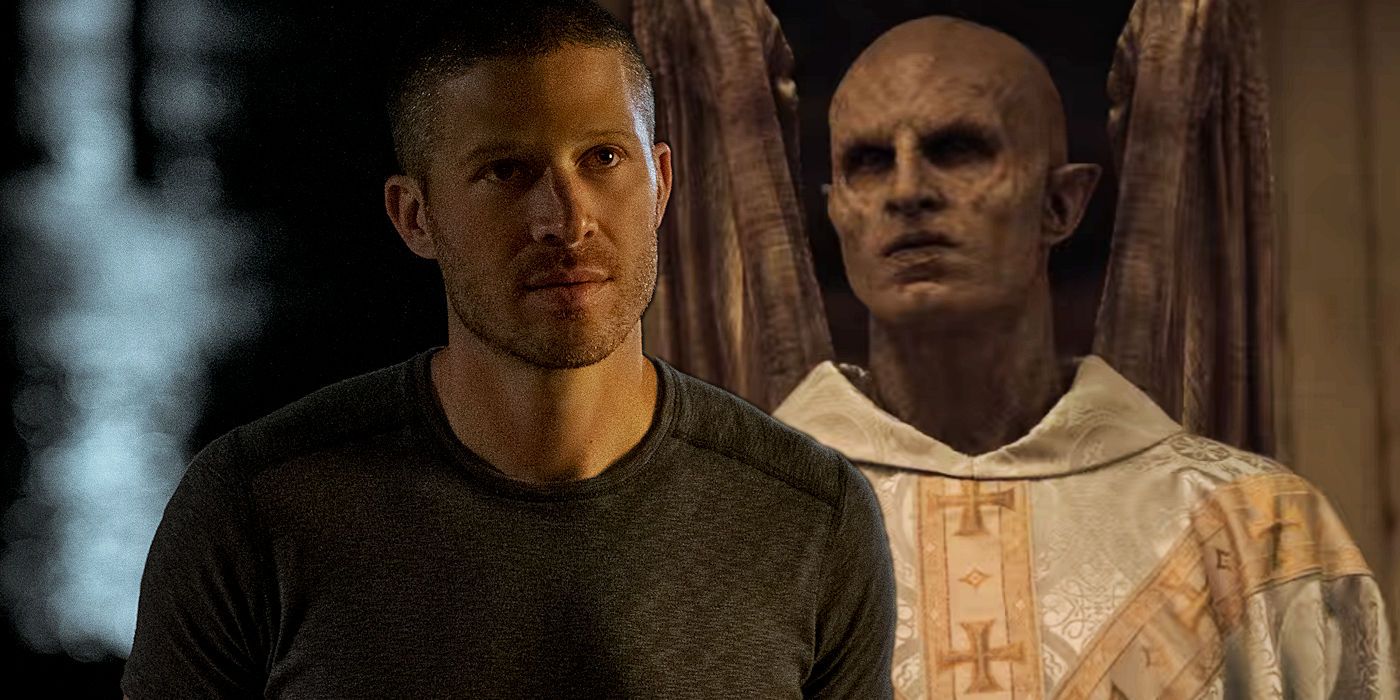
The monster in Midnight Mass is very much a vampire, but the show never once uses the word “vampire.” Following the acclaim of his Netflix haunted house horror shows The Haunting of Hill House and its standalone successor Bly Manor, Mike Flanagan returned in a different nightmare-inducing direction. As an extremely personal project that reflects his own horrors, the Doctor Sleep director used Midnight Mass’s vampire monster premise as a vehicle to explore highly accessible human fears involving faith, guilt, sobriety, forgiveness, loss, and death.
Midnight Mass follows a small isolated island town called Crockett Island, where the dying community is yearning for belief as a charismatic young priest arrives. The characters’ faith is tested as strange miracles of God appear, which are actually revealed to be the product of Midnight Mass’s vampire monster, which the characters label an angel. As Midnight Mass’s town drinks the blood of the vampire in communion to restore their ailments and eventually die to resurrect as blood-sucking vampires themselves, the dangers of religious fanaticism are exhibited in a clear comparison of Catholic and vampiric lore.
While the creature threatening Midnight Mass’s town is clearly a vampire, the word is never uttered throughout the entire series. This is mostly due to the Midnight Mass characters’ religious interpretation of the events as a gift from God, so it’s only given name within the series is an “angel.” In an interview for Netflix Geeked (via Twitter), Flanagan gives a much more specific and important reason why the word “vampire” is never said. At the end of the day, Flanagan says Midnight Mass is not a traditional vampire story because their creature means so much more as a manifestation of “fanaticism and fundamentalism.” The creature certainly plays an important role in Midnight Mass, but the series isn’t a “vampire story” at its core.
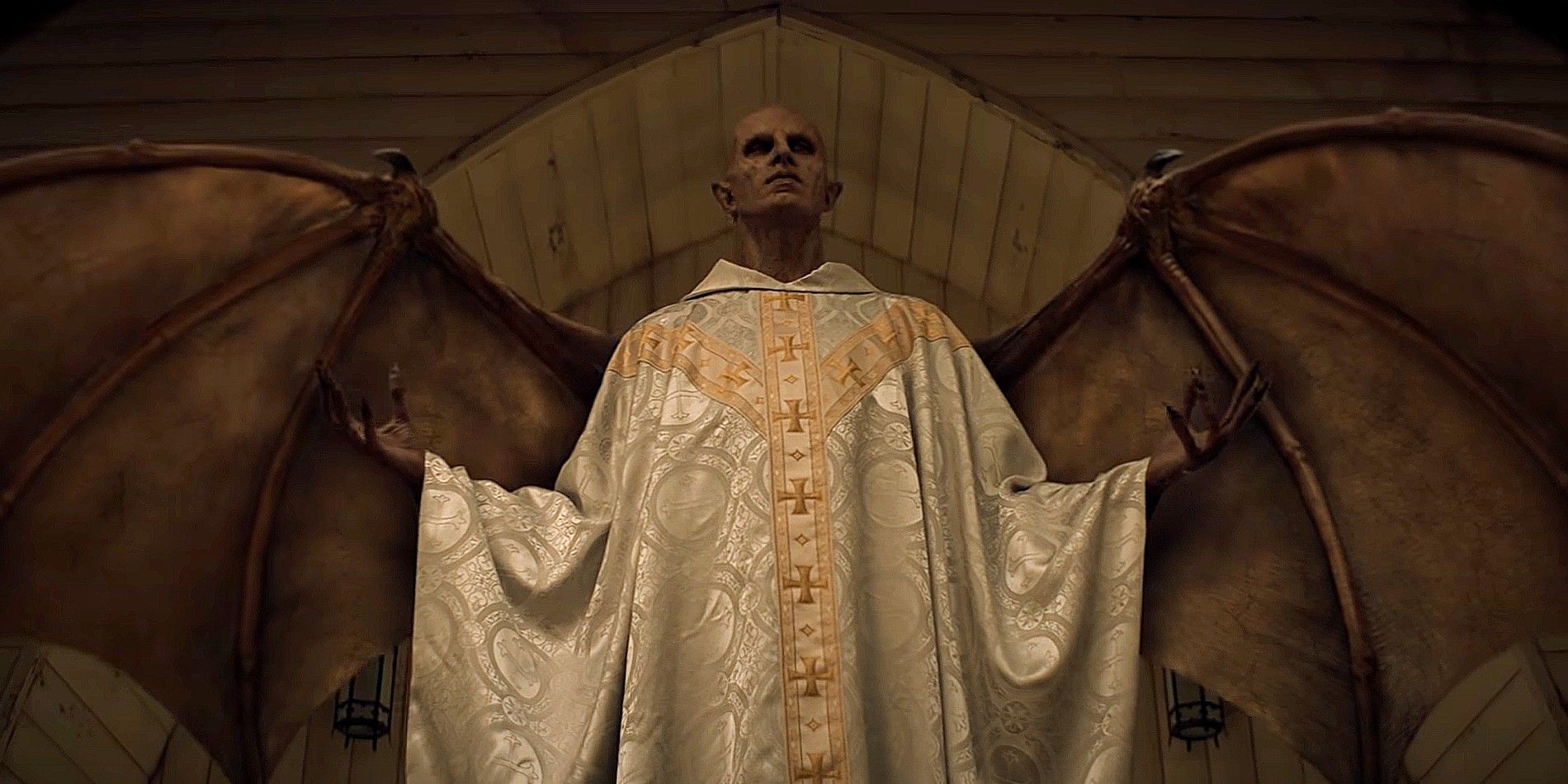
The horror director continues his argument by pointing out that if they included the word “vampire,” the entire show would be confined to expectations of centuries-worth of lore on vampires. From Bram Stoker’s Dracula to Stephen King’s 'Salem’s Lot, vampire fiction has created hundreds of years worth of tropes and expectations that Midnight Mass would inevitably be compared and relegated to in terms of established mythology. Instead, Midnight Mass uses the clear visuals and certain recognizable tropes to explicitly establish the creature as a vampire - though a vampire in Midnight Mass’s own terms. Additionally, making it a “vampire story” would inevitably pin the creature as the monster, whereas Midnight Mass’s core conflict at play is amongst the human beings and their convictions.
Flanagan then discusses the connections between vampire lore and certain iconography of the Bible, specifically the “rivers of blood” and “angels coming to the door to slaughter children,” both of which are implemented as Midnight Mass connects religion to the vampiric creature. The vampire connection supplements much of the horror tropes of the series, bringing what he long considers to be the most terrifying aspects of the Bible into a more accessible, familiar horror monster. Without actually saying the “V-word” (via Kate Siegel on Twitter) and immediately bringing with it centuries of mythological baggage, Midnight Mass was better able to adapt the creature to its own poignant themes instead of conforming to the genre expectations.
from ScreenRant - Feed https://ift.tt/3BtzjKK


